
Incomplete understanding of the multiple mechanisms underlying the link between ultra-processed foods and cardiometabolic health should not be an excuse for inaction argue Mathilde Touvier and colleagues
The effect of diet on health has historically been considered from a nutrient based perspective—for example, excess total fat, saturated fat, dietary cholesterol, calories, sugar, or salt and lack of dietary fibre, vitamins, and minerals.1 More recently, this approach has been complemented by extensive evidence supporting health effects of dietary patterns (eg, the Mediterranean diet), characterised by various dietary scores such as the Alternative Healthy Eating Index (AHEI), or DASH (Dietary Approaches to Stop Hypertension) diet.2 However, the degree of processing and formulation of foods was not taken into account. For instance, all vegetable soups were considered similar, regardless of whether they were homemade, industrial canned, or industrial dehydrated and contained food additives and flavours.
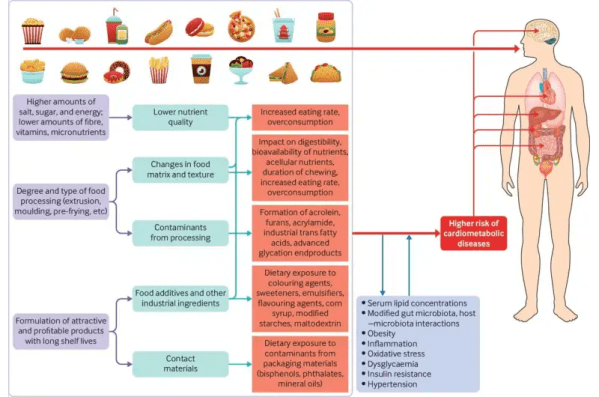
The potential health effect of food processing and food formulation, beyond their food ingredients, nutrient composition, and energy content, is now being widely researched. An important milestone was the 2009 publication of the NOVA classification,3 which categorises foods according to the type, intensity, and purpose of food processing (box 1). The ultra-processed group includes all foods and drinks made using intense physical or chemical processes or containing cosmetic food additives and other industrial ingredients (eg, artificial flavours, hydrogenated oils, glucose/fructose corn syrup).4 These foods are generally convenient, affordable, highly palatable, and often intensively advertised… (more in the link below)
https://www.bmj.com/content/383/bmj-2023-075294
 2 Medical News